
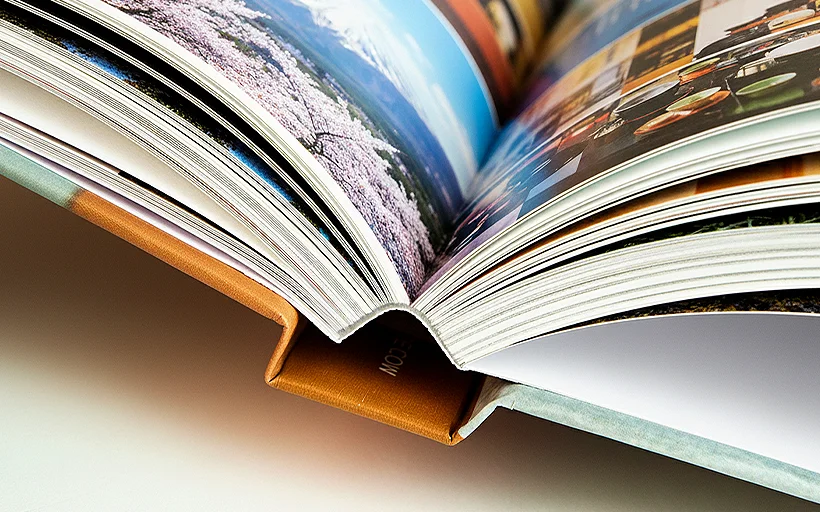
PUR (Polyurethane Reactive) binding is an adhesive binding method that uses polyurethane glue to bond individual sheets together at the spine.
Unlike traditional hot melt adhesives, PUR adhesive cures through a chemical reaction with moisture in the air, creating a bond that’s up to 50% stronger than standard EVA (ethylene vinyl acetate) adhesive.
The key advantages of PUR binding for photo book printing are durability and flexibility. Once cured, the bond is strong enough that pages remain secure through repeated use, yet flexible enough to allow books to open relatively flat.
PUR adhesive also withstands temperature extremes without glue failure, and because it uses minimal adhesive, it achieves a clean square spine even on thinner books.
Understanding PUR binding and page counts
All three of our photo album book formats use PUR binding, which affects how you plan your page counts. Understanding this prevents confusion when preparing files.
PUR binding works with single sheets rather than folded signatures. Each sheet has two sides — front and back — which means each sheet creates two pages. This is why photo books require even page counts. An odd number of pages would leave you with a blank back cover.
Individual sheets are milled at the spine, then pressed into polyurethane adhesive that creates a bond up to 50% stronger than conventional adhesive. Because we work with single sheets rather than folded signatures, you can create books with any even page count — you’re not restricted to multiples of four.
Need 26 pages? 158 pages? 294 pages? All work with PUR binding, as long as you stay within the format limits (24–500 for hardcover books, 20–300 for softcover books, 18–122 for layflat books).